

Inverter Frekuensi Rendah Apa yang Terbaik untuk Sistem Daya di Lokasi Konstruksi?
Lokasi konstruksi sering beroperasi sebelum pasokan listrik permanen tersedia. Selama pekerjaan pondasi, pemasangan struktur baja, penyelesaian interior, pekerjaan jalan, dan proyek infrastruktur di lokasi terpencil, kontraktor membutuhkan sistem daya yang dapat mendukung peralatan, penerangan, pompa, peralatan pengelasan, kantor lapangan, perangkat pemantauan, dan pengisian daya baterai.
Secara tradisional, banyak lokasi mengandalkan generator diesel untuk daya sementara. Namun, dengan meningkatnya biaya bahan bakar, pembatasan kebisingan, pengendalian emisi, dan kebutuhan akan keluaran daya yang lebih stabil, banyak kontraktor dan pembeli peralatan sekarang membandingkan sistem generator saja dengan sistem daya tenaga surya plus penyimpanan. Dalam pengaturan ini, inverter menjadi salah satu komponen kunci.
Untuk lingkungan konstruksi, sebuah inverter frekuensi rendah Hal ini sering dipertimbangkan ketika lokasi tersebut mencakup motor, pompa, kompresor, peralatan listrik, dan beban induktif lainnya yang menghasilkan arus start-up yang tinggi.
Permintaan global untuk daya listrik sementara terus meningkat. Pasar daya listrik sementara diperkirakan mencapai sekitar USD 5,58 miliar pada tahun 2024 dan diproyeksikan mencapai sekitar USD 9,23 miliar pada tahun 2030, dengan sektor konstruksi dan pertambangan termasuk di antara sektor-sektor permintaan utama. Diesel masih menyumbang sebagian besar pendapatan dari daya listrik sementara, tetapi sistem hibrida dan berbasis baterai semakin mendapat perhatian karena kontraktor mencari penggunaan bahan bakar yang lebih rendah dan daya listrik lokasi yang lebih fleksibel.
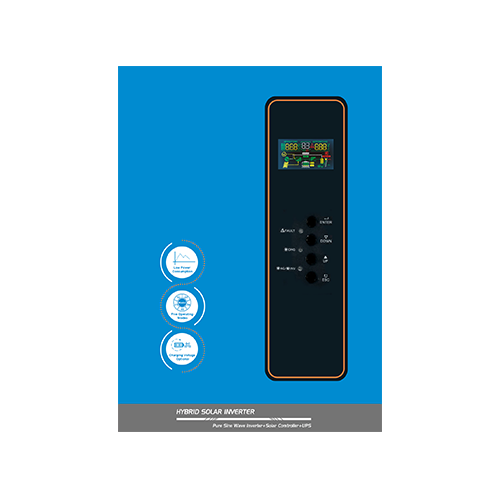
Lokasi konstruksi tidak sama dengan sistem cadangan daya rumah tangga. Permintaan daya berubah sepanjang hari, dan banyak beban yang tidak stabil. Beban kantor kecil mungkin beroperasi pada 500 W, sementara pompa air, mesin pemotong, atau kompresor udara mungkin membutuhkan beberapa kali lipat daya nominalnya selama proses penyalaan.
Beban umum di lokasi konstruksi meliputi:
| Jenis Beban | Penggunaan Umum | Perilaku Kekuasaan |
|---|---|---|
| Penerangan lokasi LED | Pekerjaan malam hari, penerangan keselamatan | Beban stabil |
| Peralatan kantor lapangan | Komputer, router, pengisi daya | Beban rendah hingga menengah |
| Pompa air | Pengeringan air, pembersihan, pekerjaan beton | Arus start-up tinggi |
| Bor listrik / alat potong | Pekerjaan instalasi harian | Fluktuasi beban yang sering terjadi |
| Kompresor udara | Peralatan pneumatik | Lonjakan permintaan yang kuat |
| Peralatan pengelasan | Pekerjaan baja, perbaikan | Daya puncak tinggi |
| Pengawasan/pemantauan | Sistem keamanan dan keselamatan | Beban rendah terus-menerus |
Oleh karena itu, pemilihan inverter tidak boleh hanya berdasarkan daya nominal. Pembeli juga perlu memeriksa kapasitas lonjakan daya, desain transformator, kompatibilitas baterai, perlindungan lingkungan, dan dukungan purna jual.
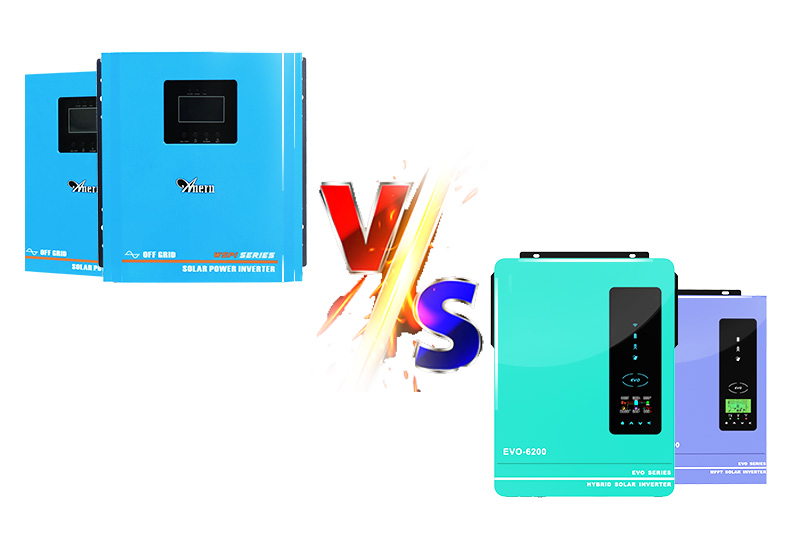
Inverter frekuensi tinggi biasanya lebih ringan, lebih ringkas, dan cocok untuk banyak sistem cadangan perumahan atau komersial ringan. Namun, beban di lokasi kerja seringkali lebih berat dan kurang dapat diprediksi.
Model frekuensi rendah umumnya digunakan di mana sistem harus menangani start-up motor, kondisi beban berlebih, dan jam kerja yang panjang. Banyak perbandingan teknis mencatat bahwa desain frekuensi rendah umumnya memberikan penanganan lonjakan daya yang lebih kuat daripada desain frekuensi tinggi, yang penting untuk motor, pompa, kompresor, dan beban yang terkait dengan pengelasan.
| Titik Perbandingan | Inverter Frekuensi Rendah | Inverter Frekuensi Tinggi |
|---|---|---|
| Transformator | Transformator yang lebih besar | Desain transformator yang lebih kecil |
| Berat | Lebih berat | Korek api |
| Penanganan lonjakan arus | Lebih baik untuk beban startup yang berat. | Lebih cocok untuk beban ringan yang stabil. |
| Penggunaan umum | Konstruksi, bengkel, sistem tanpa jaringan listrik. | Cadangan daya listrik rumah tangga, sistem tenaga surya kecil |
| Tingkat biaya | Biasanya lebih tinggi | Biasanya lebih rendah |
| Fokus pemeliharaan | Pendinginan, pengkabelan, pencocokan baterai | Pencocokan beban, pengaturan perlindungan |
Bagi pembeli B2B, pertanyaan utamanya bukanlah “mana yang lebih murah,” tetapi “mana yang dapat beroperasi dengan andal di bawah profil beban aktual situs tersebut.”
Peralatan konstruksi mungkin memerlukan daya 2–3 kali lipat dari daya nominalnya selama proses penyalaan. Misalnya, pompa 1,5 kW mungkin membutuhkan 3 kW atau lebih untuk sesaat saat dinyalakan. Jika inverter tidak dapat menangani lonjakan daya ini, sistem dapat mati, menyala kembali, atau memperpendek masa pakai peralatan.
Saat memilih inverter, periksa hal-hal berikut:
Untuk proyek konstruksi, biasanya lebih aman untuk menghitung berdasarkan permintaan puncak daripada hanya permintaan rata-rata.
Lokasi konstruksi mungkin menggunakan penerangan, pompa, router, pengisi daya, kamera, dan peralatan secara bersamaan. Beberapa beban sensitif terhadap tegangan yang tidak stabil, sementara yang lain menimbulkan perubahan arus yang tiba-tiba.
Inverter yang baik harus menyediakan:
Hal ini sangat penting terutama untuk kantor lapangan, sistem pemantauan, dan peralatan komunikasi.
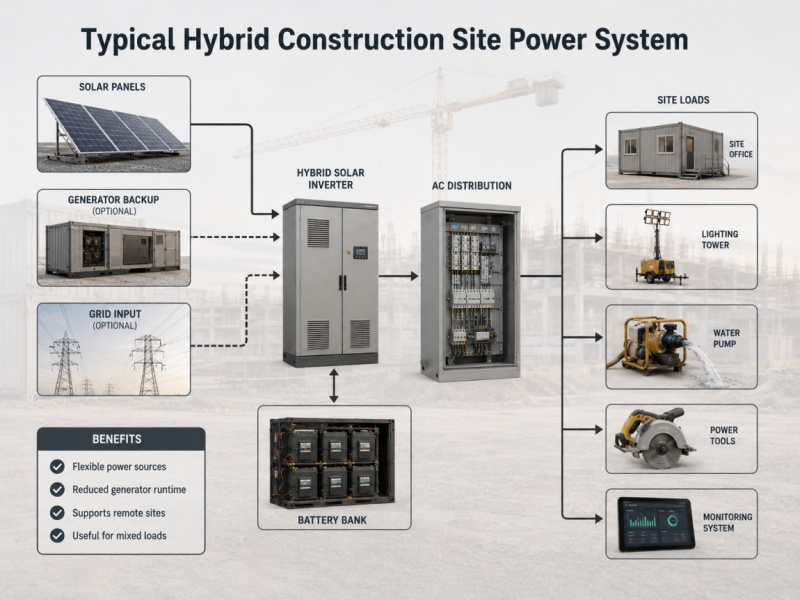
Banyak kontraktor sekarang menggunakan inverter surya hibrida untuk menggabungkan panel surya, penyimpanan baterai, input jaringan listrik, dan input generator. Hal ini memungkinkan sistem untuk mengisi daya dari tenaga surya di siang hari dan menggunakan energi yang tersimpan di malam hari atau selama periode beban rendah.
Konfigurasi hibrida dapat bermanfaat untuk:
Konfigurasi praktis dapat mencakup panel surya, inverter, penyimpanan baterai, distribusi AC, dan generator cadangan opsional.
Berikut ini adalah contoh sederhana sistem daya untuk lokasi kerja skala kecil hingga menengah.
| Peralatan | Kuantitas | Daya Terukur | Perkiraan Beban Operasional |
|---|---|---|---|
| Lampu sorot LED | 10 | 100 W | 1.000 W |
| Perangkat kantor lapangan | 1 set | 800 W | 800 W |
| Pompa air | 1 | 1.500 W | 1.500 W |
| Alat potong | 2 | 1.000 W | 2.000 W |
| Pengisi daya baterai | 4 | 150 W | 600 W |
| Sistem pemantauan | 1 | 200 W | 200 W |
| Beban berjalan total | 6.100 W |
Namun, beban kerja saat ini tidak cukup untuk menentukan ukuran inverter. Jika pompa atau alat pemotong dinyalakan bersamaan, permintaan puncak dapat meningkat di atas 9–12 kW untuk waktu singkat.
Pendekatan ukuran yang umum:
| Barang | Perhitungan |
|---|---|
| Perkiraan beban kerja | 6,1 kW |
| Margin keamanan yang direkomendasikan | 25–40% |
| Peringkat inverter yang disarankan | 8–10 kW |
| Kapasitas lonjakan yang dibutuhkan | Tergantung pada beban start-up motor. |
| Kapasitas baterai | Berdasarkan jam cadangan |
Untuk jenis sistem ini, unit 6,2 kW mungkin cocok untuk beban siang hari yang lebih ringan, sedangkan sistem 10,2 kW mungkin lebih sesuai ketika pompa, alat pemotong, dan beban kantor lapangan beroperasi bersamaan.
| Area Permintaan Daya | Perkiraan Pangsa |
|---|---|
| Penerangan | 16% |
| Peralatan dan perlengkapan pemotong | 33% |
| Pemompaan | 25% |
| Kantor dan komunikasi | 13% |
| Pengisian daya dan pemantauan | 13% |
Profil beban jenis ini membantu tim pengadaan membandingkan kapasitas inverter, kapasitas baterai, dan ukuran kabel sebelum melakukan pemesanan.
Inverter mengontrol output AC, tetapi baterai menentukan berapa lama lokasi tersebut dapat beroperasi tanpa input dari tenaga surya, jaringan listrik, atau generator.
Yang sesuai baterai inverter Sistem harus dipilih berdasarkan:
Contoh perhitungan:
| Persyaratan | Nilai |
|---|---|
| Beban rata-rata malam hari | 2 kW |
| Waktu cadangan yang dibutuhkan | 6 jam |
| Energi yang dibutuhkan | 12 kWh |
| Kapasitas baterai yang disarankan untuk digunakan | 12–15 kWh |
| Pemeriksaan sistem yang disarankan | Tegangan baterai dan arus pengisian inverter |
Jika lokasi tersebut menggunakan pompa atau peralatan listrik di malam hari, kapasitas baterai harus ditingkatkan. Untuk pekerjaan yang berlangsung lama, sistem mungkin memerlukan input tenaga surya di siang hari dan cadangan generator selama periode mendung yang panjang.
Pemasangan listrik sementara merupakan area berisiko tinggi di lokasi konstruksi. Organisasi keselamatan listrik dan panduan OSHA menekankan pentingnya pemasangan kabel yang benar, pentanahan, perangkat pelindung, dan praktik penyambungan generator yang aman. Pemasangan kabel dan distribusi daya sementara harus ditangani oleh personel yang berkualifikasi, terutama ketika sistem terhubung ke panel lokasi, kontainer, atau kantor sementara.
Poin-poin penting terkait keselamatan meliputi:
Untuk proyek B2B, dokumentasi keselamatan, diagram pengkabelan, dan panduan instalasi harus diminta sebelum pengadaan dalam jumlah besar.
Sebelum memilih inverter frekuensi rendah untuk penggunaan di lokasi konstruksi, bandingkan spesifikasi berikut:
| Spesifikasi | Mengapa Ini Penting |
|---|---|
| Daya keluaran terukur | Menentukan kapasitas beban kontinu |
| Daya puncak | Menangani penyalaan motor dan beban berlebih jangka pendek. |
| Tegangan keluaran AC | Harus sesuai dengan peralatan di lokasi. |
| Tegangan baterai | Memengaruhi ukuran kabel dan efisiensi sistem |
| Arus pengisian | Mempengaruhi kecepatan pengisian baterai |
| Rentang tegangan input surya | Menentukan desain rangkaian PV |
| Waktu transfer | Penting untuk perangkat sensitif |
| Fungsi perlindungan | Mengurangi waktu henti dan risiko peralatan. |
| Metode pendinginan | Penting untuk lokasi yang panas dan berdebu. |
| Antarmuka komunikasi | Berguna untuk pemantauan dan pemeliharaan |
| Masa garansi | Penting untuk perencanaan proyek dan distributor. |
Bagi pembeli grosir, penting juga untuk memeriksa kemasan, ketersediaan suku cadang, dokumentasi teknis, dan apakah pemasok dapat mendukung persyaratan OEM atau tegangan yang disesuaikan.
| Jenis Situs | Beban Umum | Rentang Inverter yang Disarankan |
|---|---|---|
| Lokasi perbaikan kecil | Lampu, pengisi daya, peralatan kecil | 2–4,2 kW |
| Kantor lokasi sementara | Peralatan kantor, lampu, kamera | 4,2–6,2 kW |
| Lokasi pembangunan kecil | Pompa, peralatan, beban kantor | 6,2–10,2 kW |
| Lokasi infrastruktur terpencil | Motor, penerangan, komunikasi, beban cadangan | 10,2 kW atau lebih besar |
| Proyek multi-zona | Beberapa area distribusi daya | Sistem inverter ganda atau desain sistem yang lebih besar |
Bagi importir, perusahaan EPC, distributor, dan kontraktor proyek, seringkali lebih baik untuk menyiapkan beberapa opsi kapasitas daripada hanya satu model. Hal ini memudahkan untuk mencocokkan berbagai ukuran proyek dan tingkat anggaran.
Sebelum meminta penawaran harga, siapkan informasi berikut:
Tabel muatan yang jelas membantu pemasok memberikan solusi yang lebih akurat dan mengurangi risiko kekurangan ukuran.
Inverter frekuensi rendah terbaik untuk lokasi konstruksi tidak selalu model dengan daya tertinggi. Inverter tersebut harus sesuai dengan beban aktual di lokasi kerja, arus start-up, waktu cadangan, sistem baterai, dan lingkungan instalasi.
Untuk peralatan ringan dan kantor lapangan, sistem 4,2 kW atau 6,2 kW mungkin sudah cukup. Untuk pompa, kompresor, alat potong, dan beban AC campuran, model frekuensi rendah yang lebih besar dengan kapasitas lonjakan yang lebih kuat biasanya lebih cocok. Untuk proyek di luar jaringan listrik atau penghematan bahan bakar, sistem hibrida tenaga surya dan baterai dapat mengurangi jam kerja generator dan meningkatkan fleksibilitas energi.
Bagi pembeli B2B, pemilihan inverter yang tepat dapat mengurangi waktu henti, menyederhanakan perencanaan daya sementara, dan mendukung pengoperasian lokasi yang lebih aman. Sebelum membeli, selalu tinjau profil beban, kapasitas baterai, fungsi perlindungan, dan kemampuan dukungan teknis.

Menambahkan :5th Floor, Building B, No.2817 Kaichuang Avenue, Science Zone, Huangpu District, Guangzhou, China


Anern Industry Group Limited Seluruh hak cipta
.Xml | Kebijakan Privasi  DIDUKUNG JARINGAN
 Bahasa


